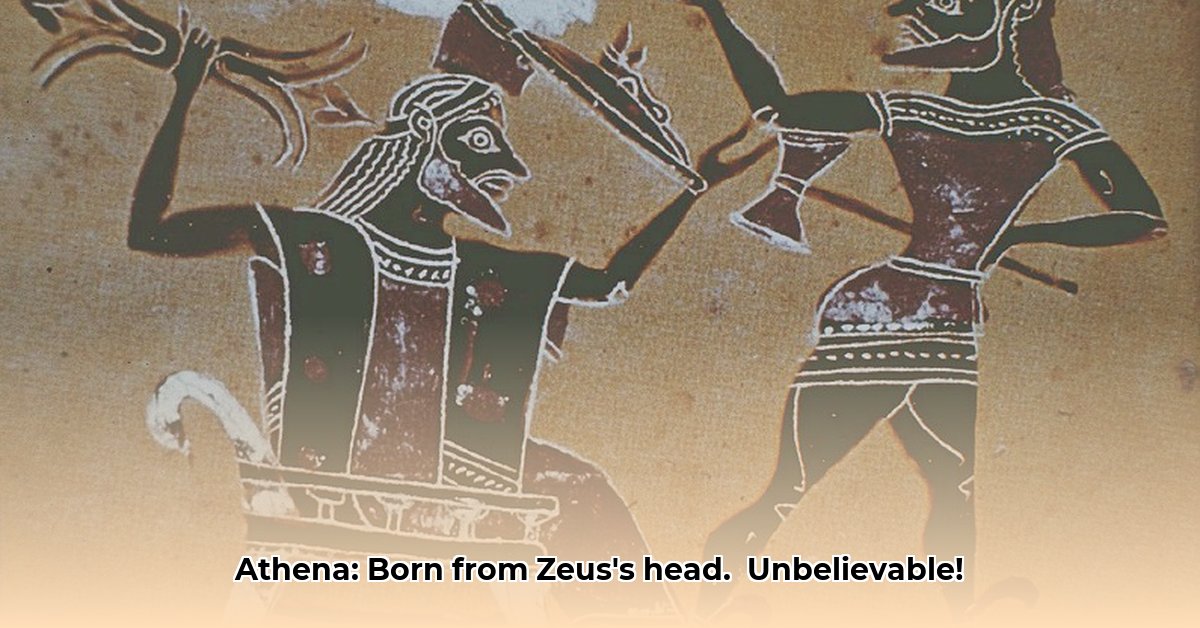
Athena's Explosive Arrival: A Mythological Masterpiece
Picture this: A thunderous crack splits the air, not of lightning, but of something far more profound. From the brow of Zeus, King of the Gods, bursts forth Athena, fully grown, clad in shimmering armour, a goddess born not of flesh and blood but pure, incandescent might. This isn't just a tale whispered on the wind; it’s a foundational myth of ancient Greece, a story that continues to resonate with power and intrigue. This article delves into the captivating narrative of Athena's birth, exploring its myriad symbolic interpretations and enduring legacy. We'll unpack the diverse versions of the myth, examining the clash between Athena and Poseidon, and ultimately considering the profound implications of this goddess's unique arrival. How did this extraordinary birth shape Greek culture, and what does it mean for us today?
The Birth of a Goddess: Variations on a Theme
The myth of Athena's birth isn't a monolithic narrative; it exists in multiple versions, each subtly enriching our understanding. Some recount the story of Metis, Zeus's wife, a Titaness of exceptional wisdom. Upon learning of a prophecy foretelling that Metis would bear children more powerful than him, Zeus, ever wary of his own authority, swallowed her whole, a horrifying act of preemptive paternal control. Yet, from this act of tyrannical suppression, Athena emerged, a testament to the enduring power of intellect. Other accounts portray Athena's birth as more spontaneous, a direct manifestation of Zeus's divine power, springing forth from his head as a fully formed warrior goddess. Regardless of the specific telling, the core message remains consistent: Athena's arrival was extraordinary, a stark departure from the conventional processes of birth. Isn't this divine birth a powerful symbol in itself, surpassing the limitations of mere mortal experience?
The Symbolism of Athena's Emergence: Wisdom and Warfare
Athena's fully armed emergence is far from a random detail. Her armour isn't just a costume; it's a potent representation of her dual nature – a goddess of both wisdom and warfare. She didn't merely observe the battles of mortals; she actively participated, shaping outcomes and inspiring heroes. Isn't her immediate readiness for combat a symbol of her inherent strategic prowess, a goddess born ready to face any challenge? This iconography highlights her unique blend of intellectual strategy and formidable military power, a characteristic that resonated deeply within Greek society. Her very existence defies easy categorization, mirroring the complexities of the human condition. This duality is reflected further in her roles as patron of crafts and arts, showcasing her multifaceted influence on Greek life.
Athena versus Poseidon: A Battle for Athens, a Clash of Ideals
The contest between Athena and Poseidon for the patronage of Athens encapsulates a fundamental conflict of values. Poseidon, god of the sea, offered a powerful, albeit somewhat brutal, gift – a wellspring of saltwater. But Athena, displaying her inherent wisdom, presented the olive tree – a symbol of peace, prosperity, and abundance. The Athenians, favouring the promise of civilisation over raw power, chose Athena. This legendary contest wasn't just a power struggle, it was a battle of ideologies, a pivotal decision that shaped the very identity of Athens. What does this illustrate about the values that the ancient Greeks, demonstrably, prioritised? It is arguably a powerful illustration of how the strategic and far-sighted approach often triumphs over short-term gains through brute force. This continues to resonate with us today, reminding us of the enduring power of intelligent decision-making in both individual and collective contexts.
The Enduring Legacy of Athena's Birth: Echoes Through Time
The myth of Athena's birth from Zeus's head is more than a mere ancient tale; it’s a potent symbol that continues to resonate in our contemporary world. The image of a fully formed, battle-ready goddess, born of pure intellect and divine power, serves as a powerful metaphor for the potential within each of us, the ability to rise above limitations and strive for greatness. Her enduring legacy reflects the human aspiration toward wisdom, strategic thinking, and the pursuit of peace. Her symbols, the owl and the olive branch, continue to represent wisdom and peace, underscoring the myth's enduring relevance. Therefore, how can we not be inspired by Athena, the ever-present symbol of the power of wisdom and strategic brilliance? The myth stands as a testament to the capacity of such stories to illuminate the complexities of the human experience itself, transcending the boundaries of time and culture.